What is attack journalism?
Attack journalism – the vilification (whether justified or not) of an individual by the media – is also one of the first representational cultures of news.
Few industries-of-information have a “pack mentality” like journalism. If a story garners attention on one platform, it often piques the interest of others and is republished again without further verification. Potential news stories pass through a series of value judgements, including those of journalists, editors and owners, which can lead to the “symbolic annihilation” of social groups by “omission, trivialisation or condemnation”[i]. When an individual is perceived to be a direct threat to their commercial or socio-political power then an attack can become part of editorial strategy[ii]. Attack journalism is therefore a process of celebrification whereby a person’s visibility is raised, while simultaneously there is an attempt to limit public engagement with what they have to say. Too often, amplifications of falsehood or rumour are justified by journalists because the information is already in the public domain. Both journalists and online users alike need to consider whether rumour or conjecture are fuelling content.
[i] Gaye Tuchman, “Introduction: The symbolic annihilation of women by the mass media.” In Hearth and Home: Images of Women in the Mass Medi, eds, Gaye Tuchman, Arlene Kaplan Daniels and James Benét (New York: Oxford University Press, 1978) pp. 3-38.
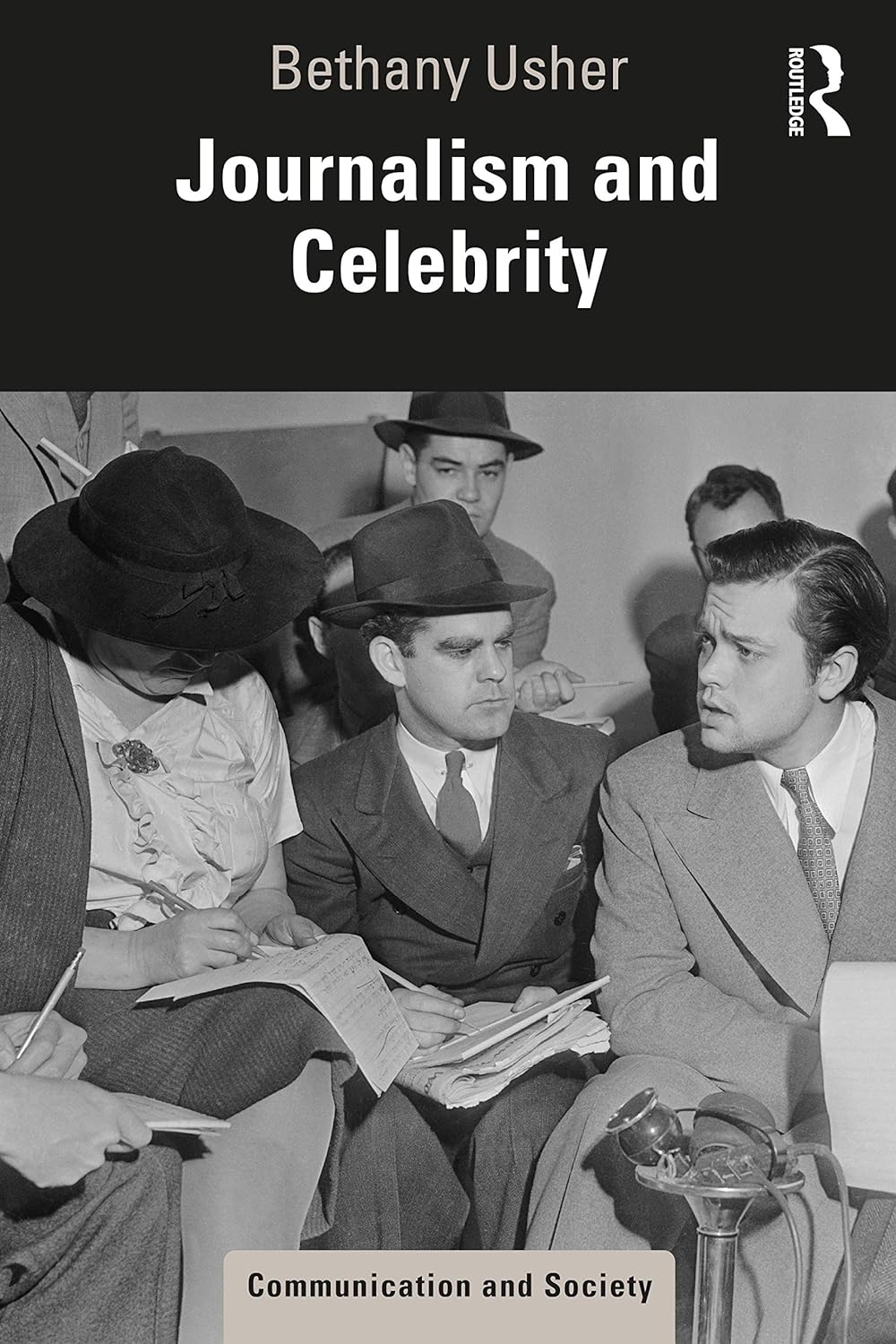
[ii] Bethany Usher, Journalism and Celebrity (London and New York: Routledge, 2021), 38.
How can you spot an attack?
There is a clear methodology. It is sustained, usually across multiple publications and platforms and while with hindsight this is often for a relatively condensed in time, there is no visible end in sight for audiences watching and/or participating in the spectacle. It often refers to, or hints at, characteristics of difference such as class, race, gender or sex, religion and claims to reflect public opinion, when its purpose is to shape it. The dominance of white men in public spheres meant that in its historical development those subject to an attack were often from this social group, although women were often attacked too. Broader representation of people from the 20th century onwards means those that are most often attacked often have other characteristics of difference. From young black sports stars claiming a political voice, to politicians who argue substantive social change, to celebrities declared as “woke” for highlighting issues of environmental, racial or LGBTQ injustice, attacks relate identity to opinion in complex ways. Expansions in digital space, including what is often referred to as “cancel culture” might be politically driven too, but attack journalism is one of the ways the news industry looks to maintain their gatekeeping and place as arbitrators of public opinion.
How could press codes of conduct counter attack journalism?
In the UK, the IPSO Code (print press and their digital brands) and OFCOM (broadcast and new online powers) codes of practice define public interest and issues of harassment and/or fairness. But while IPSO and Ofcom both address persistent pursuit, neither consider how persistent publication can also be harassment or unfair. In text, image or audio-visual form, persistent publication can include references to sex or gender, sexuality, class, race, religion, nationality or disability and publication of falsehood, rumour or conjecture. Codes of practice should address such embedded inequalities of representation and repetition directly.
Proposed changes to IPSO codes are highlighted here in bold.
Independent Press Standards Organisation Editor’s Code of Conduct
Point 3. Harassment
i) Journalists must not engage in intimidation, harassment or persistent pursuit either when news gathering or during publication.
ii) They must not persist in questioning, telephoning, pursuing or photographing individuals once asked to desist; nor remain on property when asked to leave and must not follow them. If requested, they must identify themselves and whom they represent.
iii) Editors must ensure these principles are observed by those working for them and take care not to use non-compliant material from other sources.
iv) Editors must ensure that they do not engage in harassment through persistent publication –in text, image or audio-visual materials – based on or referring to sex or gender, class, race, religion, sexuality, nationality or disability, or through publication of falsehoods, rumour or conjecture.
For Ofcom, section seven’s focus on “fairness” demands broadcasters avoid “unjust or unfair treatment of individuals or organisations in programmes”[1]. But current examples do not discuss whether targeted broadcast against an individual might be “unjust or unfair”. That is not to say that this practice would not be a breach of the code, but it does not clarify that it is. Suggested additions are as follows:
Section 7.2: Fairness and harassment
Broadcasters must not engage in intimidation, harassment or persistent pursuit either when news gathering or during broadcast.
Broadcasters must ensure these principles are observed by those working for them and take care not to use non-compliant material from other sources.
Editors must ensure that they do not engage in harassment through persistent broadcast – in text (online), image or audio-visual based materials – based on or referring to sex or gender, class, race, religion, sexuality or nationality or through publication of falsehoods, rumour or conjecture.
[1] Relevant legislation includes, in particular, sections 3(2)(f) and 326 of the Communications Act 2003 and sections 107(1) and 130 of the Broadcasting Act 1996 (as amended), Article 28 of the Audio-visual Media Services Directive, Article 10 of the European Convention on Human Rights, and the BBC Charter and Agreement.

 Author / Journalist / Academic / Educator